
More Information
Submitted: August 20, 2026 | Accepted: August 25, 2026 | Published: August 27, 2026
Citation: Pouya AK, Ahmadi AW. Traffic-informed Pavement Performance Prediction and Maintenance Prioritization Using the Pavement Condition Index: A Case Study from Afghanistan. J Genet Med Gene Ther. 2026; 9(1): 12-18. Available from:
https://dx.doi.org/10.29328/journal.jgmgt.1001016
DOI: 10.29328/journal.jgmgt.1001016
Copyright license: © 2026 Pouya AK, et al. This is an open access article distributed under the Creative Commons Attribution License, which permits unrestricted use, distribution, and reproduction in any medium, provided the original work is properly cited.
Keywords: Pavement management system; Condition index; Deterioration modeling; Rebound deflection; Average annual daily traffic

Traffic-informed Pavement Performance Prediction and Maintenance Prioritization Using the Pavement Condition Index: A Case Study from Afghanistan
Abdul Karim Pouya1* and Abdul Wahed Ahmadi2
1Lecturers Professor in Asia University, Engineering Faculty, Civil Engineering Department, Specialization in Transportation Engineering Herat Afghanistan
2Istanbul University-Cerrahpaşa, Faculty of Engineering, Department of Environmental Engineering, PhD -Candidate and Research Collaborator, İstanbul, Türkiye
*Corresponding author: Abdul Karim Pouya, Lecturers Professor in Asia University, Engineering Faculty, Civil Engineering Department, Specialization in Transportation Engineering Herat Afghanistan, Email: [email protected]
Road infrastructure serves as the primary medium of economic and agricultural transportation in developing countries. Afghanistan’s district roads play a critical role in connecting rural production centers to markets; however, systematic maintenance is often hindered by inadequate funding, lack of structural monitoring, and climatic deterioration. This research develops pavement condition assessment and deterioration prediction models using Pavement Condition Index (PCI), pavement age, characteristic rebound deflection (Dc), and Average Annual Daily Traffic (AADT). Multiple regression models were generated based on recorded field data across six district road sections in Herat Province. Regression coefficients demonstrated high goodness of fit (R² = 0.964 – 0.992), indicating reliable predictive capability. Based on PCI-based prioritization, maintenance strategies were ranked and scheduled under budget constraints. Results indicate that Sections D01 and D02 urgently require rehabilitation due to structural fatigue and distress propagation, while other sections can be preserved through preventive maintenance. This study provides a scientifically supported PMS framework for Afghan district roads, enabling optimized resource allocation, deterioration forecasting, and long-term serviceability planning.
Road transportation infrastructure is one of the primary components driving socioeconomic growth, regional connectivity, and commercial productivity. Efficient movement of goods and passengers relies heavily on a functional road network, and its deterioration often leads to increased travel time, vehicle operating costs, and reduced economic output. Pavements in developing countries are particularly vulnerable due to insufficient maintenance, environmental stress, and increasing traffic demand, making Pavement Management Systems (PMS) an essential tool for sustainable infrastructure planning. A PMS is defined as a coordinated set of methodologies that assists engineers and decision-makers in determining cost-effective maintenance, rehabilitation, and improvement strategies for roadway networks [1].
Road infrastructure forms the structural backbone of transportation networks, enabling mobility, trade exchange, and socioeconomic integration. Globally, more than 80% of freight and passenger movement occurs on road networks, making their performance vital for economic stability, national productivity, and territorial connectivity [2]. Pavements deteriorate gradually due to traffic loading and environmental aging; however, the rate of deterioration rapidly accelerates in the absence of periodic maintenance [3]. Therefore, Pavement Management Systems (PMS) have emerged as a scientific framework that incorporates engineering evaluation, performance prediction, and budget-based maintenance allocation to ensure sustainable network condition.
A PMS facilitates optimal decision-making by answering three fundamental engineering questions: what type of treatment is required, where maintenance should be applied, and when intervention is most cost-effective [4]. The essential principles of PMS involve inventory development, pavement condition assessment, performance modelling, prioritization, and maintenance programming [5]. Condition assessment is commonly conducted using the Pavement Condition Index (PCI), which evaluates surface distress severity and extent to quantify serviceability. PCI is widely recommended for maintenance decision frameworks, especially where structural and deflection-based monitoring is limited [6,7].
In Afghanistan, road deterioration has become a critical challenge due to insufficient maintenance funding, limited technical resources, rapid traffic growth, and harsh freeze–thaw climatic cycles. These factors contribute significantly to cracking, potholes, rutting, moisture infiltration, and surface raveling, ultimately reducing pavement life. District roads, which connect agricultural hubs to economic centers, are particularly vulnerable because they receive the lowest maintenance prioritization despite carrying high agricultural and rural freight volumes. According to Afghanistan Ministry of Public Works reports, available maintenance funding covers less than 30% of required interventions annually, resulting in backlog accumulation and premature pavement failures [8].
International research indicates that early preventive maintenance may extend pavement service life by 50–75%, while delayed interventions lead to costly rehabilitation or full reconstruction [9,10]. Developing countries lacking PMS frameworks often spend 3–5 times more on rehabilitation because preventive maintenance is not applied at the correct intervention time [11]. This proves the necessity of adopting systematic, data-driven maintenance prioritization models in Afghanistan.
This research focuses specifically on district roads, as these routes accommodate substantial freight movement yet receive minimal maintenance resources compared to national or provincial highways. The study develops pavement deterioration models using PCI, AADT, structural deflection, age, and freeze–thaw conditions to predict long-term performance and prioritize maintenance timing. Regression-based deterioration prediction offers a scientific basis for maintenance scheduling, enabling infrastructure agencies to allocate scarce budgets more realistically, reduce long-term rehabilitation cost, and enhance overall network serviceability.
The outcomes of this study provide a template for decision-makers to integrate PMS-based planning into Afghanistan’s road maintenance system, supporting sustainable infrastructure development and strengthening rural–urban economic linkage.
PMS challenges in developing countries
Countries such as Afghanistan face severe pavement degradation due to several factors that are arranged in the Table 1.
| Conclusion: Factors causing pavement degradation. | |
| Limiting factor | Impact on pavement lifecycle* |
| Inadequate maintenance budget | Premature failures, rehabilitation instead of preservation |
| Freeze–thaw climatic cycles | Expansion–contraction crack propagation |
| Lack of structural monitoring | Poor decision timing for interventions |
| Overloading & agricultural freight | Permanent deformation, rutting, pothole expansion |
| *MoPW Afghanistan, 2022; Huang, 2004 [3,8] | |
In Afghanistan, district roads carry agricultural commodities and ensure rural–urban connectivity, yet these roads receive minimum maintenance priority. When preventive maintenance is delayed, rehabilitation becomes inevitable, often requiring 4 – 6 times higher cost compared to early intervention [10,11].
Research Contribution
This study develops a PMS-based condition prediction model using:
Pavement condition (PCI)
Pavement age
Structural strength indicator (Dc)
Traffic intensity (AADT)
Freeze–thaw cycles
The model is further applied to propose maintenance ranking and timing. The methodology can be replicated for national PMS frameworks across Afghanistan and other developing regions.
Multiple international studies show that pavement condition declines exponentially with traffic loading, climate stress, and aging, and early-stage maintenance significantly reduces long-term rehabilitation cost [6,12]. PCI is widely used due to its simplicity and reliability in characterizing visible surface distress [13]. Benkelman Beam deflection methods remain standard for elastic response evaluation in developing countries due to cost-efficiency relative to FWD-based approaches [14].
Pavement Condition Index (PCI) has been internationally recognized as one of the most reliable and widely used serviceability evaluation indicators, allowing engineers to quantify surface distress severity and maintenance needs [13,6]. The Asphalt Institute method supports performance diagnosis through distress mapping and severity rating, enabling strategic decision-making in pavement rehabilitation plans [15]. Numerous studies confirm that PCI combined with structural indicators such as deflection and subgrade stiffness significantly improves predictive maintenance accuracy [16].
Traffic-induced stress is among the most influential determinants of pavement deterioration. High AADT levels accelerate rutting, fatigue cracking and overall surface distress [3]. Road age is another significant predictor of pavement decline, as pavements older than seven years commonly enter the rapid deterioration stage of the performance curve [17]. In this research, the oldest pavement segments (8–8.5 years) correspondingly demonstrated the lowest performance indices.
Environmental factors, particularly freeze–thaw cycles, lead to moisture ingress, weakening of base and subbase layers, and crack propagation [18]. The integration of these variables into a maintenance priority matrix aligns with global highway asset strategies [19], where maintenance is scheduled based on remaining service life. Preventive and routine maintenance at moderate PCI levels (70–80) is proven to be more cost-effective than late-stage rehabilitation [20]. Accordingly, this study’s prioritization framework reinforces sustainable budget allocation, maximizing performance lifespan through early intervention.
Regression-based prediction models are used successfully in India, Iran, Pakistan, and Malaysia to forecast pavement deterioration using traffic, age, and deflection values [21,22]. However, Afghanistan lacks district-road-level PMS datasets, particularly in rural zones. This research fills that gap through calibrated models and prioritization procedures for real-time decision application.
Although extensive research establishes PCI-based and mechanistic methods for pavement forecasting [3,6,21], there is a distinct lack of locally calibrated, low-cost PMS studies for Afghan district roads that jointly use PCI, Benkelman Beam deflection, AADT, and freeze–thaw exposure to produce operational maintenance schedules under real budget limits. This study fills that gap by providing an empirical dataset, high-performing regression models (R² up to 0.992), and a practical prioritization program for Karukh–Herat Road, yet it also points to necessary future work (ESALs, SN, continuous monitoring, LCCA) to fully institutionalize PMS practice in the region.
Study area and data collection
The study was conducted on a district major road (Karukh District Road, Herat Province Afghanistan), consisting of six pavement segments (designated D01–D06), representing a continuous transportation route that supports both local and intercity economic movement. The surveyed corridor plays a critical role in freight mobility, passenger transport, and agricultural products distribution. The total evaluated length of the route is 60 kilometers, divided into six manageable pavement monitoring sections ranging from 7 km to 13 km each. The corridor is located in a freeze–thaw transition climatic zone, characterized by seasonal temperature fluctuations, periodic surface moisture infiltration, and winter cracking expansion. Climatic severity varies across the network, with D01 to D03 subjected to 3 freeze–thaw cycles annually, while D04 to D06 experience 4–5 cycles, amplifying stress on asphalt layers and subgrade moisture vulnerability.
Field condition survey methodology
The pavement evaluation followed the Asphalt Institute and PCI survey methodology, which are summarized in Table 2.
| Table 2: Methods used for survey and data collection. | |
| Activity | Method used* |
| Distress identification | Visual surface inspection & distress mapping |
| PCI determination | ASTM D6433 defect scoring method |
| Structural Behaviour | Benkelman Beam-based Characteristic Deflection (Dc, mm) |
| Traffic assessment | Annual Average Daily Traffic (AADT count) |
| Climatic factors | Freeze–thaw exposure classification |
| *Resource: Methodological procedures arranged by the Author (Pouya, 2025). | |
Each segment was walked/vehicle-surveyed, visibly distressed locations were quantified, and PCI was computed as the mean score across sampled units. Structural condition was verified using characteristic deflection (Dc), reflecting pavement response to load and indicative of structural fatigue (Benkelman Beam readings were taken every 100 m with 6–9 tests per km following IRC 81:1997) and subgrade stiffness.
Pavement condition and structural dataset
The combined pavement performance dataset collected for the six district road sections includes PCI, Age, AADT, and Characteristic Deflection (Dc). The Pavement Condition Index values range from 60 to 79, representing a spectrum from Fair to Satisfactory. This variation highlights visible performance deterioration along the network heavily influenced by traffic intensity and age. Sections D01 and D02, with PCI values of 60 and 66 respectively, are the oldest sections (8.0–8.5 years) and experience the highest daily traffic (AADT 1179–1338 vpd). Their lower PCI values strongly correlate with increased load stress and fatigue cracking progression.
Structural performance represented by Dc values further reinforces the observed deterioration. Deflection measurements vary between 1.35 mm and 1.83 mm, with the highest recorded in D06 (Dc = 1.829 mm), indicating weaker subgrade support despite relatively high PCI. This dual observation suggests that surface condition alone does not fully represent pavement health, and a section may appear visually satisfactory while structurally weak. In contrast, D01 (Dc = 1.35 mm) exhibits both poor PCI and moderate structural weakness, meaning failure is already advancing from surface to deeper layers.
Table 3 summaries also demonstrate that PCI decreases as Age and AADT increase, confirming expected deterioration behavior in bituminous district road systems. Meanwhile, sections with moderate traffic loads such as D04 and D05 maintain PCI values above 73 due to lower loading stress and fewer freeze–thaw interactions. These interactions are evident in structural responses where areas experiencing higher freeze – thaw frequency (4 –5 cycles per year) show accelerated cracking, raveling and loss of surface integrity, especially if preventive seal coats are not applied timely. Lower PCI correlates with older segments and higher AADT, especially D01 and D02. Younger segments (D05–D06) maintain higher PCI values, but D06 exhibits elevated structural deflection despite lighter traffic–suggesting underlying base or moisture weakness.
| Table 3: Structural & functional condition dataset of study area | ||||||
| Section | Length (Km) | PCI | Age (years) | Deflection Dc (mm) | AADT (vpd) | Freeze–Thaw |
| D01 | 7 | 60 | 8.5 | 1.35 | 1338 | 3 |
| D02 | 9 | 66 | 8.0 | 1.70 | 1179 | 3 |
| D03 | 11 | 72.5 | 7.5 | 1.76 | 1027 | 3 |
| D04 | 9 | 73.5 | 7.0 | 1.51 | 856 | 4 |
| D05 | 13 | 75.5 | 6.6 | 1.40 | 769 | 4 |
| D06 | 11 | 79 | 6.0 | 1.83 | 711 | 5 |
| *Source: Data were collected and analyzed as part of this research (Pouya, 2025). | ||||||
Climatic severity increases from D01 to D06, but traffic loading remains the dominant factor in early deterioration stages. Structural deflection values above 1.70 mm (D02, D03, D06) signal loss of structural integrity requiring medium-term rehabilitation. Table 3 presents the numerical condition inputs extracted from field observations.
Data analysis
The assessment of pavement condition across the six district road sections was carried out using PCI evaluation, rebound deflection testing, visual distress mapping, and regression-based deterioration modelling. The dataset combines surface condition indices with structural and traffic parameters including Age, AADT, Characteristic Deflection (Dc), and Freeze–Thaw cycle severity. The analysis process was executed using IBM SPSS v20 and MS Excel, enabling the development of both polynomial deterioration models and multiple linear regression formulations.
PCI behaviour and surface performance trend
PCI values for the network range between 60 and 79, demonstrating that pavement condition varies from Fair to Good. Early deterioration is apparent in older road sections. Table 4 demonstrates the PCI of each section and its ranking according to the ASTM D6433.
| Table 4: Sections PCI and conditions | |||
| Section | PCI | Age (Years) | Condition* |
| D01 | 60 | 8.5 | Fair – nearing critical failure |
| D02 | 66 | 8.0 | Fair |
| D03 | 72.5 | 7.5 | Satisfactory |
| D04 | 73.5 | 7.0 | Satisfactory |
| D05 | 75.5 | 6.6 | Satisfactory |
| D06 | 79 | 6.0 | Good |
| *Source: Data were collected and analyzed as part of this research (Pouya, 2025). | |||
A gradual increase in PCI is noticeable with decreasing pavement age, indicating normal fatigue-induced deterioration. For every year of aging, PCI reduces by approximately 5–8 points, consistent with deterministic pavement behavior patterns described in similar studies.
Structural response based on deflection (Dc)
Rebound deflection values vary from 1.35 mm to 1.83 mm, signifying different levels of structural stiffness and subgrade strength. A clear performance relationship is observed:
Higher Dc causes Higher deformation risk which in turn induces Faster pavement deterioration
Lower Dc provides better load support and in turn causes Slower structural degradation
Although D06 showed the highest PCI, it also recorded the largest deflection (1.829 mm) suggesting ongoing sub-surface weakening which may lead to accelerated cracking if not preserved with preventive maintenance. Conversely, D01 shows both low PCI and moderate deflection, implying prolonged neglect and the need for immediate structural intervention. The key findings from the dataset are summarized in the Table 5.
| Table 5: Key findings from dataset* | ||
| Factor | Trend observed | Interpretation |
| Age ↑ - PCI ↓ | PCI dropped from 79 at age 6 to 60 at age 8.5 | Continuous deterioration without maintenance |
| AADT ↑ - PCI ↓ | Higher traffic = faster distress propagation | D01 has highest AADT (1338) and lowest PCI (60) |
| Dc ↑ - Structural Weakening | D06 shows highest Dc (1.829 mm) despite high PCI | Indicates early structural fatigue not yet visible on surface |
| Freeze-thaw cycles accelerate damage. | Sections with 4–5 cycles show more cracking pattern | Moisture weakening + high thermal stress |
| *Source: Data were collected and analyzed as part of this research (Pouya, 2025). | ||
From the above, pavement age, traffic load and freeze–thaw exposure jointly dictate deterioration. Structural weakening is visible even in high PCI pavements, proving that PCI alone cannot capture hidden subsurface failure without deflection evaluation, reinforcing the necessity of structural assessment in PMS.
Regression modelling of pavement performance
Polynomial and multiple-regression models were developed to understand deterioration progression and forecast future performance. The polynomial deterioration model relating PCI to Age is:
PCI = 83.69 - 5.16X + 0.456X2 (R2 = 0.915)
This model shows a strong correlation, explaining 91.5% of deterioration behavior with age as the primary factor. As pavement advances into later service life, surface condition drops sharply, confirming that timely maintenance within the early life-cycle would significantly reduce degradation. Multiple regression models were also generated incorporating environmental and traffic parameters and summarized in the Table 6.
| Table 6: Multiple regression models. | |||
| Model | Equation* | R² | Variables |
| M1 | PCI = 104.396 – 6.519X₁ + 8.96X₂ | 0.964 | Age, Dc |
| M2 (Best Fit) | PCI = 68.07 + 1.565X₁ + 12.669X₂ – 0.029X₃ | 0.992 | Age, Dc, AADT |
| M3 | PCI = 103.46 – 2.977X₁ + 9.465X₂ – 0.0191X₃ – 1.883X₄ | 0.990 | Age, Dc, AADT, Freeze-thaw |
| M4 | PCI = 108.9 – 2.528X₁ – 0.0195X₂ | 0.961 | Age, AADT |
| *Source: Multiple regression analysis results derived from the research dataset. (Pouya, 2025). | |||
The regression with Age + Dc + AADT (R² = 0.992) is identified as the most reliable predictive model due to its lowest intercept (a₀ = 68.07) and highest explanatory accuracy. The significance of AADT is clearly evident, indicating that traffic loading is the strongest contributor to pavement decay among all tested variables. The deterioration trend of PCI with respect to the Age, Dc, AADT, Freeze-thaw of each road section is demonstrated in Figure 1.
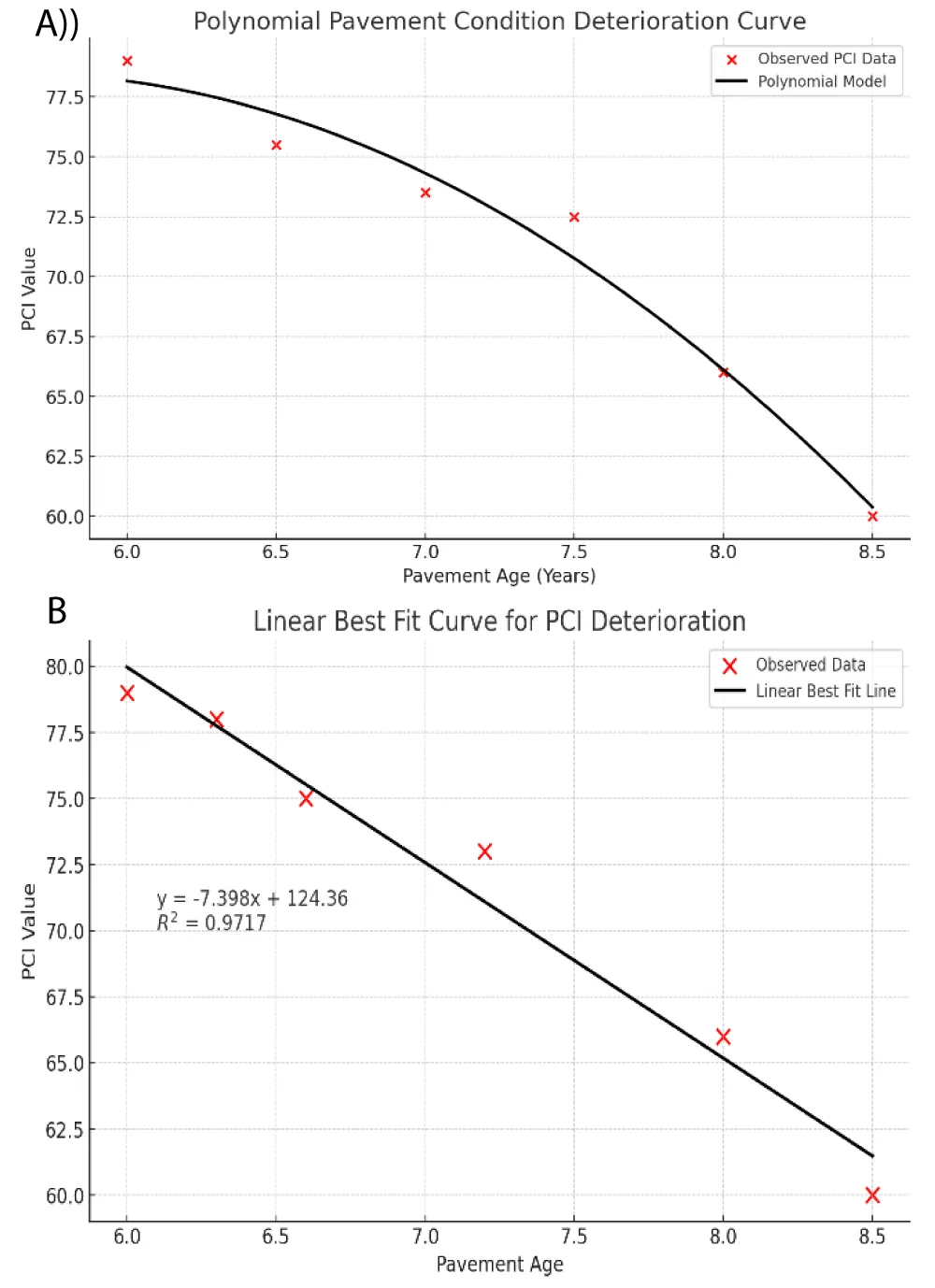
Figure 1: Deterioration trend of PCI with respect to the age of sections. (a) Polynomial Deterioration Trend Curve; (b) Linear Deterioration Trend Curve.
Figure 2. Relationship between Pavement Condition Index (PCI) and three key influencing factors: Average Annual Daily Traffic (AADT), pavement age, and degree of compaction (Dc). The figure illustrates how increasing PCI is generally associated with decreasing traffic load and pavement age, while Dc shows minimal variation. Data represented in this figure are derived from the researchers’ analysis of field measurements from the studied road sections.
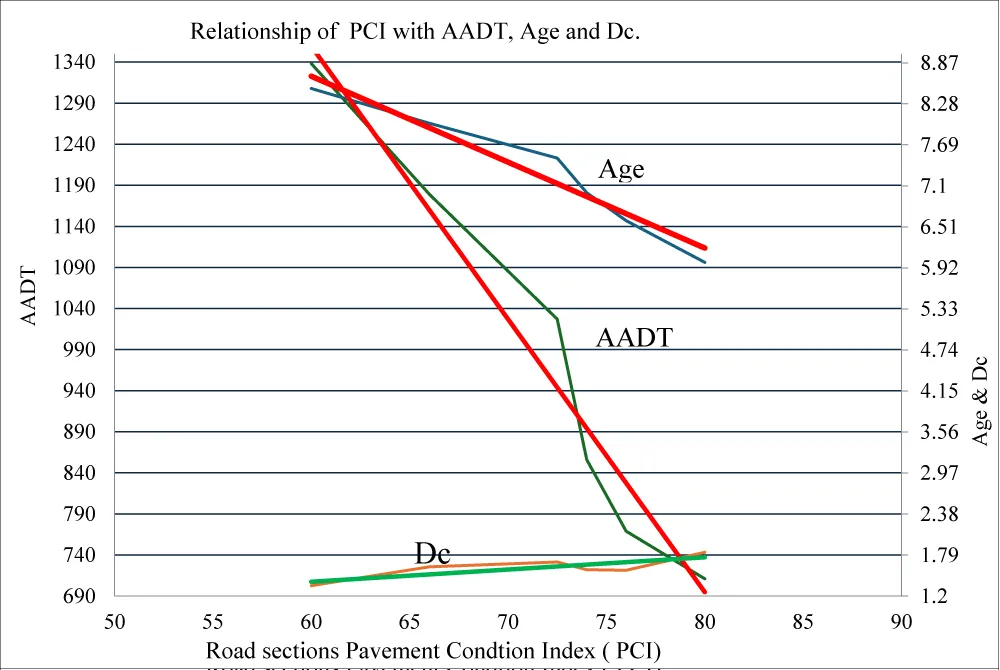
Figure 2: Relationship between Pavement Condition Index (PCI) and AADT, Pavement Age, and Distress Level (Dc).
Maintenance priority based on data analysis
Based on pavement condition rating (PCI), structural deflection (Dc), traffic loading and environmental degradation behavior, three hierarchical pavement maintenance strategies are proposed for the Karukh–Herat District Road: Preventive Maintenance, Corrective Rehabilitation, and Major Structural Restoration. These strategies aim to extend pavement service life, delay costly reconstruction, and maintain minimum acceptable performance standards under rising traffic demand. A life-cycle strategy is crucial for budget efficiency and Table 7 points out to the Long-Term Life-Cycle Maintenance Planning of the road sections. With proper scheduling, full reconstruction can be delayed by 10–14 years.
| Table 7: Long-term life-cycle maintenance planning* | ||
| Year | Recommended action | Target sections |
| 2025 | Structural rehab + overlay | D01, D02 |
| 2026–27 | Corrective maintenance | D03, D04 |
| 2027–2028 | Preventive surface treatment | D05, D06 |
| 2030 onward | Network-wide preventive sealing and overlays | All sections |
| *Source: Results derived from the research findings. (Pouya, 2025). | ||
Based on condition indices, traffic load and deterioration tendencies, scheduling for Maintenance & Rehabilitation (M&R) interventions was prioritized in Table 8 as follows:
| Table 8: For maintenance & rehabilitation (M&R) prioritization* | |||
| Priority | Sections | Recommended Action | Timeline |
| High Priority | D01, D02 | Minor rehabilitation + major maintenance | 2025 |
| Medium Priority | D03, D04 | Major maintenance | 2026 |
| Low Priority | D05, D06 | Routine + preventive maintenance | 2027 |
| *Source: Results derived from the research findings. (Pouya, 2025). | |||
High-priority sections demand immediate structural response to avoid exponential cost escalation, as maintenance-cost multipliers indicate that deferred rehabilitation can cost 4–7 times more once pavement falls below threshold PCI.
Freeze–thaw cycles showed a progressive increase along the corridor (3–5 cycles/year). Surface cracking increased proportionally with climatic severity in D04–D06; however, deterioration accelerated faster in D01–D02 due to heavy traffic. This suggests that traffic intensity is the dominant distress trigger, whereas climatic effect accelerates surface cracking but does not solely drive PCI reduction.
Study outcomes indicate that lack of timely maintenance is the primary reason for premature pavement failure. Only protective and periodic maintenance can defer costly rehabilitation, especially in agricultural transport corridors. If PCI is continuously monitored and maintenance is executed at threshold stages (PCI 70–80), pavement life can extend 6–10 additional years, reducing lifecycle expenditure significantly.
The study confirms that PCI-based and deflection-assisted pavement management can accurately direct maintenance funds, reduce future rehabilitation cost, and extend district road service life. Without strategic scheduling, high-traffic sections will likely require reconstruction within 3–4 years, significantly burdening available resources. Therefore, data-driven PMS implementation remains the most economically sustainable pathway for Afghanistan’s district road infrastructure.
The combined dataset of PCI, pavement age, deflection, freeze–thaw frequency and AADT reveals a clear deterioration pattern across the Karukh District network. PCI values demonstrate a downward trend with increasing pavement age—mirroring the polynomial regression prediction model developed earlier (PCI = 83.69 − 5.16x + 0.456x², R² = 0.915). The high coefficient of determination validates the model as a reliable performance estimator for mid-life asphalt pavements, particularly under Afghanistan’s climatic and traffic conditions.
The multiple-regression model also indicates that distresses are correlated not only with age but also with structural strength (Dc), traffic volume (AADT) and environmental cycles. Sections D01 and D02, despite having moderate PCI, display relatively high deflections (1.35–1.70 mm) and elevated AADT (>1100 vehicles/day), signaling early structural fatigue and accelerated load-associated distress. In contrast, D05 and D06 maintain higher PCI and lower traffic pressure, yet rising Dc and freeze–thaw exposure suggest future vulnerability if intervention is delayed.
The study’s maintenance prioritization outcomes reflect these relationships well. Pavements with lower PCI and higher structural deflection were ranked for immediate rehabilitation, while relatively stronger and younger pavements were placed under preventive routine treatments. This demonstrates the value of integrating mechanistic indicators (Dc) alongside functional indicators (PCI). If maintenance were scheduled based solely on PCI, D06 could be mistakenly overlooked despite a relatively high deflection value of 1.829 mm. Such mismatched prioritization could lead to sudden structural decline despite visually satisfactory surface condition.
Furthermore, maintenance timing simulations show that preventive intervention at PCI >70 can extend pavement service life by 5–8 years at one-third the cost of heavy rehabilitation—reinforcing global asset management findings. This aligns with deterioration literature, where proactive sealing, topical treatments, and overlays delay cracking progression, reduce moisture ingress, and postpone expensive structural renewal cycles.
This research analyzed pavement condition, deterioration behavior, and maintenance prioritization for six roadway sections in the Karukh District using PCI evaluations, structural deflection results, AADT, and climatic stressors. The pavement performance curve generated from empirical data demonstrated a strong predictive capability (R² = 0.915), validating the polynomial regression model for future planning. Field results confirmed that age alone does not dictate pavement condition; instead, a combination of surface distress, traffic intensity, structural deflection, and freeze–thaw occurrence govern deterioration rate.
The developed maintenance ranking model successfully categorized pavement sections into minor preservation, medium-level corrective overlay, and major rehabilitation groups. Sections D01 and D02 require urgent rehabilitation due to low PCI and high load exposure, while D05 and D06 can be preserved efficiently through preventive maintenance. Prioritizing early treatments on roads with moderate PCI but rising Dc values will yield significant sustainability and cost benefits.
Ultimately, this study highlights the importance of integrating performance modeling, real-time pavement condition surveys, and mechanistic distress indicators into maintenance decision making. If implemented, the proposed plan is expected to extend pavement service life by 10–14 years, delay reconstruction, and optimize maintenance budgeting for local road authorities. The approach presented herein may serve as a scalable framework for road agencies across Afghanistan, particularly where funding is limited and deterioration acceleration is climate-driven.
Future studies may incorporate more variables such as axle load spectra, subgrade CBR, rainfall distribution, and material composition to further enhance prediction precision. Continuous data collection and condition-monitoring will remain critical for sustaining pavement performance under increasing traffic growth and environmental stress.
Recommendations for future work
Expand dataset to more Afghan district roads for regional calibration.
Conduct HDM-4 life cycle cost analysis once traffic and climate datasets mature.
Increase frequency of condition survey to twice annually—pre- and post-winter.
Integrate rainfall, construction quality, and Structural Number (SN) into future models.
Data availability statement
The data used to support the findings of this study are available from the corresponding author upon reasonable request.
Author contributions
Both the conception and design stages were jointly carried out by: Abdul Wahed Ahmadi and Abdul Karim Pouya. The data collection, analysis, and drafting stages were carried out by Abdul Wahed Ahmadi.The data interpretation as well as the critical revision stages were carried out by Abdul Karim Pouya. Both the corresponding as well as the accountability stages were carried out by: Both authors
- Haas R, Hudson WR, Zaniewski J. Modern pavement management. Krieger Publishing; 1994.
- World Bank. Global infrastructure outlook: Roads and growth. Washington (DC): World Bank; 2020.
- Huang YH. Pavement analysis and design. Prentice Hall; 2004.
- Federal Highway Administration. Pavement management roadmap 2.0. Washington (DC): FHWA; 2016.
- Haas R, Hudson WR, Falls LC. Pavement asset management. Wiley; 2015.
- Shahin MY. Pavement management for airports, roads, and parking lots. Springer; 2005.
- ASTM International. Standard practice for roads and parking lots pavement condition index surveys. ASTM D6433 18. West Conshohocken (PA): ASTM International; 2018.
- Ministry of Public Works. Afghanistan national road condition report. Kabul (Afghanistan): MoPW; 2022.
- American Association of State Highway and Transportation Officials. Pavement preservation guide. Washington (DC): AASHTO; 2012.
- Chou EYM, Pulugurta H. Pavement condition prediction model for local government pavement management systems. Washington (DC): Transportation Research Board; 2008.
- Jiang Y, Sinha KC. Optimization models for pavement maintenance programming. J Transp Eng. 1989;115(3):316 29.
- Yoder EJ, Witczak MW. Principles of pavement design. Wiley; 1975.
- American Society of Civil Engineers. Pavement management systems manual. Reston (VA): ASCE; 2010.
- Indian Roads Congress. IRC:115 guidelines for structural evaluation using Benkelman Beam. New Delhi (India): IRC; 2019.
- Asphalt Institute. Pavement maintenance and rehabilitation guidelines. Lexington (KY): Asphalt Institute; 1999.
- Khan R, Qasem S. PCI based pavement deterioration modelling using structural deflection indicators. Int J Pavement Eng. 2020;21(7):885 97.
- Zhou Y, Li H, Chen X. Long term pavement performance under traffic-climate interaction. Transp Res Rec. 2016;2586:34 45.
- Ceylan H, Gopalakrishnan K, Bayrak MB. Impact of freeze-thaw conditions on pavement performance. J Cold Reg Eng. 2018;32(3):1 12.
- Elkins GE, Zimmerman KA, Liu R. Pavement management roadmap. Washington (DC): Federal Highway Administration; 2019.
- World Bank. Road asset management framework for low income countries. Washington (DC): World Bank; 2018.
- Farhan S, Fwa TF. Pavement deterioration and maintenance model for tropical regions. J Transp Eng. 2013;139(11):1079 90.
- Ghanbari A, Khabiri MM, Teymouri M. Development of PCI based performance models. Constr Build Mater. 2018;162:411 28..